Senators push KTDA to adopt scientific tea grading to end bonus payment disparities
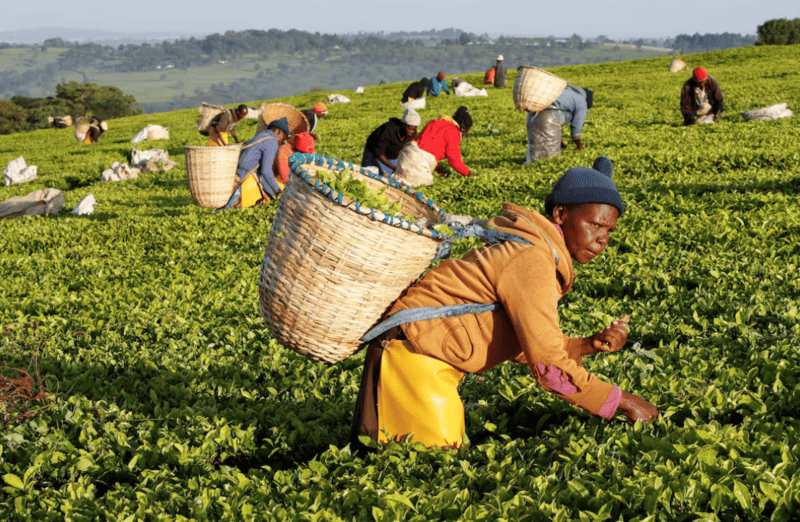
The legislators questioned why some of the 77 KTDA-managed factories paid up to Sh50 per kilogramme, while others offered as little as Sh12 per kilo, despite all operating under the same national framework.
Senators have urged the Kenya Tea Development Agency (KTDA) to adopt a scientific system for determining tea quality, saying it is the only way to end persistent disparities in bonus payments to farmers across the country.
The legislators raised concern over widespread complaints from growers, particularly in western Kenya, who have accused the agency of favouring factories in the Mt Kenya region. They argued that the current method used to grade tea is opaque, leading to wide differences in what farmers ultimately earn.
More To Read
- CS Kagwe announces policy overhaul for sugar, tea and miraa to protect farmers’ earnings
- Rift Valley tea producers clash over pricing and representation
- Tea board to probe workers paid without farms in crackdown on fraudulent earnings
- Farmers accuse KTDA of favouring Eastern regions in bonuses
- National Assembly probes tea bonus disparities after farmer complaints
- National Assembly to probe tea sector over low bonuses and uneven pricing
The legislators questioned why some of the 77 KTDA-managed factories paid up to Sh50 per kilogramme, while others offered as little as Sh12 per kilo, despite all operating under the same national framework.
Kericho Senator Aaron Cheruiyot said KTDA must embrace a scientific approach that objectively assesses tea quality, noting that pricing remains a critical factor in determining farmers’ earnings and overall satisfaction.
He cautioned that unless the issue is addressed, growers will continue to express frustration over unequal bonuses.
“There was an increase in earnings from Sh138 billion to Sh215 billion, but the only way it can make sense is if the ordinary farmer from deep down in the villages, from where we come from, can see that and record it as an improvement of earning, particularly from both KTDA and the other privately run factories as well, so that they earn better,” Cheruiyot said.
Nyamira Senator Okong’o Omogeni said farmers in his county experienced a drastic drop in bonus payments, despite reports of higher national export earnings.
“If our export earnings rose, the way it was said, from Sh138 billion to Sh215 billion, my question is, where did those earnings go? I say this because the payment of bonuses to our farmers declined drastically. There was a sharp decline in earnings,” Omogeni said.
Nominated Senator Esther Okenyuri also questioned why farmers from the Mt Kenya region reportedly received higher bonuses in the year ending June 30, 2025, compared with other tea-growing areas.
Kisii Senator Richard Onyonka added that farmers in the western region are often told their tea fetches less because of alleged soil depletion, an explanation he argued cannot justify the large payment gaps recorded.
In September, KTDA attributed the drop in earnings to international market conditions and changes in currency exchange rates. The agency said that in 2024, the Kenyan shilling traded at an average of Sh144 to the US dollar, while in 2025, it averaged Sh129.
“This weaker exchange rate meant that even where international prices were stable, the amount realised in Kenya Shillings was significantly lower,” KTDA said.
The agency also reported a regional variation in tea prices. East Rift and Kiambu farmers earned Sh371 per kilo, down Sh46 from last year, while Murang’a earned Sh376, down Sh42, Nyeri Sh388, down Sh42, Kirinyaga Sh400, down Sh38, Embu Sh404, down Sh34, and Meru Sh381, down Sh46.
KTDA explained that tea from high-altitude zones naturally fetches better prices due to superior quality, which is preferred in international markets. The agency said that this partly explains the price differences between the East and West of the Rift region and noted that while global trading conditions are beyond its control, it has plans to cushion farmers and stabilise incomes.
Top Stories Today